The Reverse Auction: How the Machine Economy Puts Consumers in Control
Six shifts in connectivity, identity, mobility, autonomous agents, decentralised commerce, and payments are converging. The result is a machine economy where consumers set the terms and retailers compete to fulfil them - in real time, mediated by software agents.
Retail has always worked the same way. The seller sets the terms. The buyer decides whether to accept them.
Retailers choose the price, the promotion, the delivery window. Even the things we think of as consumer-friendly - price comparison sites, loyalty apps, same-day delivery - still work within that framework. The retailer publishes. The consumer picks.
That is about to change. And I do not think most of the industry has grasped how fundamentally.
The connected economy: every asset becomes an economic actor
We talk about 5G and 6G connecting the built environment, but that undersells it. SpaceX's Starlink, AST SpaceMobile, and a growing number of satellite constellations are killing dead zones altogether. Direct-to-mobile satellite means your phone - or your retailer's fridge, or their delivery van, or a vending machine on a platform in rural Wales - stays connected no matter where it is.
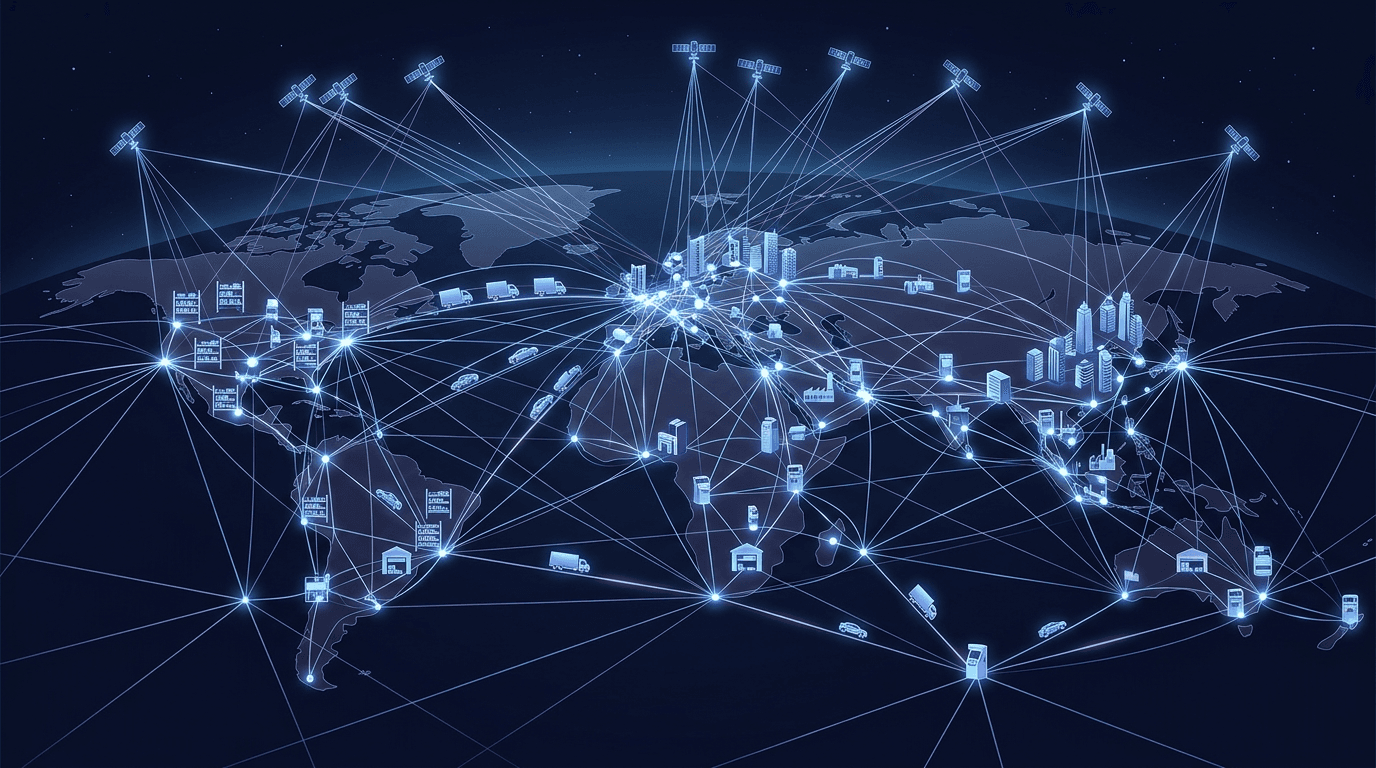
The deeper shift is direct-to-asset connectivity. When you can put a live connection on any physical object anywhere, that object stops being a thing you track and becomes a thing that trades. A vending machine is not a box that dispenses drinks anymore - it is a discoverable endpoint that reports its inventory, adjusts pricing, and responds to queries from consumer agents.
Every asset becomes discoverable
Shelves, vehicles, production lines, kiosks, charging stations - every physical asset a retailer owns becomes something agents can find, check for authenticity, and transact with.
Consumers broadcast intent
A connected fridge knows the milk is low. A wearable picks up that blood sugar is dropping. These signals become live commercial opportunities in a connected economy.
The trust inversion: identity goes both ways
Here is how retail works today: retailers collect your data through loyalty cards, cookies, purchase history, and third-party brokers. You have limited visibility into what is collected and almost no control over how it is used. It is a one-way relationship.
Self-sovereign identity turns this on its head. Consumers own their digital identity. They decide who sees their preferences, purchase history, dietary requirements, sizing data, location. Nobody gets access by default. Every exchange is permissioned, auditable, and revocable.

Discovery requires verification
Consumer agents do not use Google. They search registries of verified identities. If your brand is not verified, it is not in the registry. If it is not in the registry, you do not exist to the consumer's agent.
Data exchange requires trust
The more personalised you want the experience to be, the more trust you need upfront. Trust is not a marketing claim - it is a cryptographic handshake that happens before anything else.
Mobility reimagined: vehicles and surfaces as commerce platforms
Autonomous electric vehicles will connect to infrastructure and service providers directly. Your car will know where you like to stop, what you eat, when you need fuel, which brands you prefer. Every journey becomes a string of commerce events.
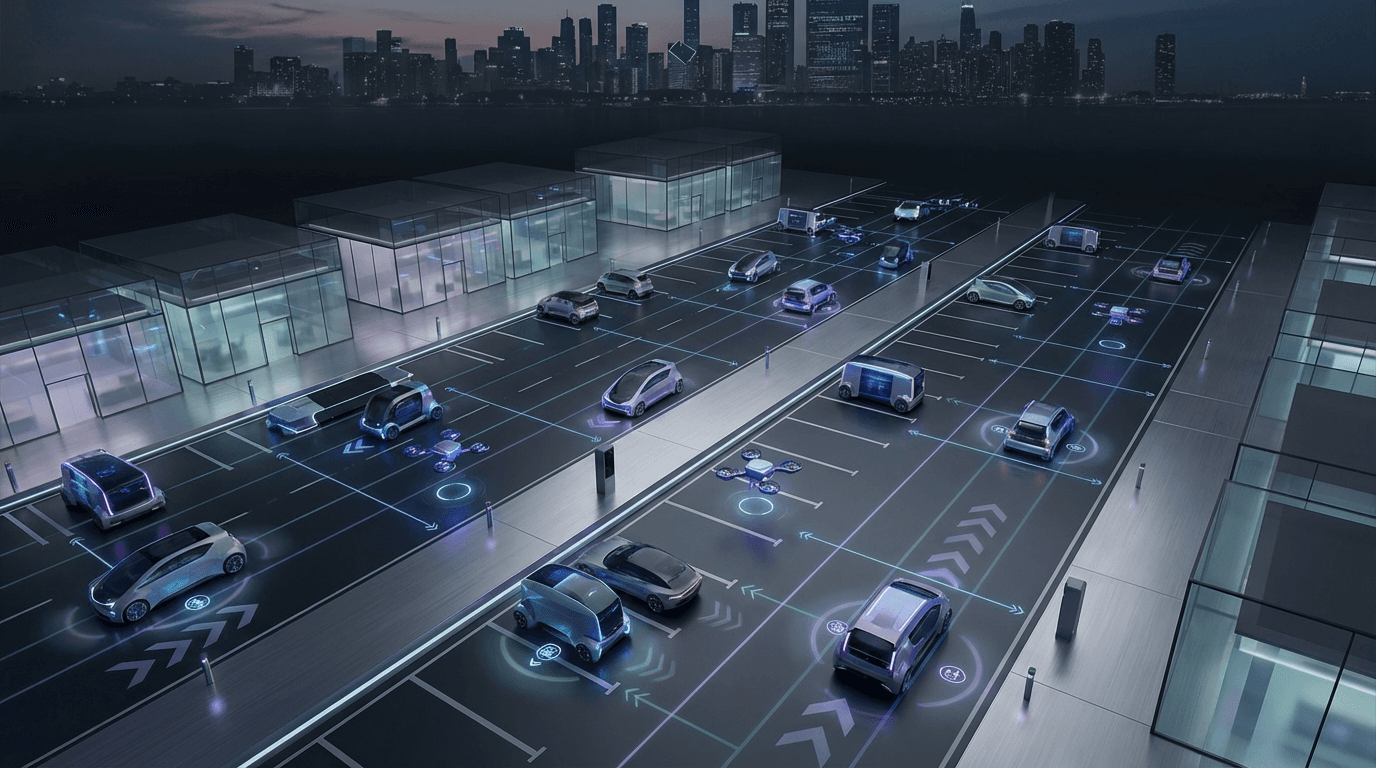
The surface side is just as significant. When millions of autonomous vehicles start showing up at retail locations, that tarmac becomes an orchestrated commerce endpoint. A shopping centre operator running this infrastructure can charge usage fees for pick-up and drop-off reservations. A QSR chain can run its own autonomous delivery fleet from its own forecourt - no aggregator commission.
Physical retail space becomes a multi-revenue hub
A forecourt is not overhead - it is an autonomous commerce surface. Charging infrastructure brings energy revenue. Stall reservations bring access fees. Delivery coordination brings logistics revenue. Every revenue stream runs through agents transacting in real time.
The reverse auction: consumers set the terms
This is where it all comes together. Autonomous Economic Agents - AEAs - are software that transacts with other software, with people, and with organisations, on its own, in real time. They are not chatbots and they are not recommendation engines. They are economic actors. They negotiate, compare, and execute.
Compare that to how it works now. You open three tabs, search for Colombian coffee, compare prices, check delivery options, read some reviews, and buy from whichever site felt most convenient. The retailer set the price. The retailer chose the delivery window. The retailer controlled the funnel.
With AEAs, you publish what you want and the market comes to you. We are calling it the "Superbasket." You do not price-check individual items. Your AEA builds the whole basket from whichever mix of retailers offers the best fit. One wins the coffee, another gets the bread, a third takes the cleaning supplies.
This rewrites the rules of retail. Pricing becomes consumer-controlled. Discovery becomes parameter-driven - agents search on price, sustainability credentials, delivery speed, verification status, allergen profiles. Not on who spent the most on Google Ads. Fulfilment becomes where you win or lose.
Decentralised commerce: the controlled funnel is over
The reverse auction gets more powerful when the goods themselves become portable digital assets. Picture every product and service tokenised into a standard format, listed on a public ledger. Searchable globally, tradeable instantly, no platform sitting in the middle.

The funnel disappears
SEO, paid search, platform placement - none of it drives traffic when the consumer's agent is searching on parameters rather than browsing websites. Price, sustainability, delivery speed, brand verification - that is what matters.
Manufacturers gain visibility
The information advantage retailers have held - knowing more about the end consumer than the people who actually make the products - disappears. Manufacturers start incentivising purchases on their own terms.
The payment revolution: agents become the biggest spenders
Visa and Stripe are both building agentic payment infrastructure. That should tell you everything about where this is headed.

They are building rails for a world where software agents initiate most commercial transactions. One person makes a few purchases a day. Their agent, running continuously, handles hundreds - price comparisons, micro-bids, fulfilment negotiations, loyalty redemptions, subscription management, delivery payments. Scale that across every consumer and connected device in the market.
Payments become continuous and conditional
An agent holds funds while negotiating with three retailers simultaneously, releases two holds when it picks a winner, settles the third in a different currency. All within seconds. One basket might generate dozens of micro-transactions.
The thread that runs through all of this
Every shift described here - connectivity, identity, mobility, autonomous agents, decentralised commerce, agentic payments - points to the same place. The machine economy does not run on marketing. It does not run on brand recognition the way we have understood it. It runs on trust. Verified, cryptographic, machine-readable trust.
An asset cannot participate unless agents can discover and authenticate it. Consumers will not share data with a brand that cannot prove its identity. Consumer agents will not bid on offers from unproven retailers. Payments will not settle unless both sides are authenticated. Trust is not a feature of this economy. It is the operating system.
If you made it this far, you understand the value of owning, verifying, and securing your own brand representative. Not a chatbot. An actual agent capable of engaging in your voice, with your decision-making matrix, transacting on your terms in the machine economy.
Joe Hurst - Joe.Hurst@fetch.ai
Own your brand's voice in the machine economy
The positions are being taken now. Claim your verified agent, establish your cryptographic identity, and become discoverable to every consumer agent in the market.